brazil religion vs santara
get religion link
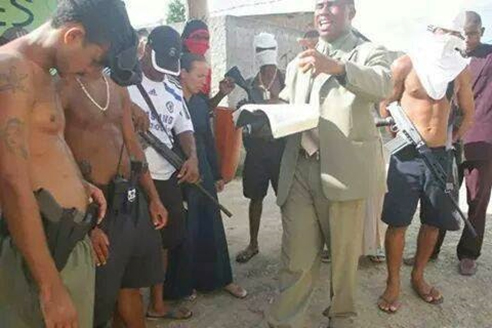


wapost story
here is my original blogpost.
GetReligion blog links to a WaPo article about ex gangmembers who became Pentecostals who are now shutting down Santeria and Voodoo type "priests" who hold services.
who cares?
well, someone tell the Pope: The Pachamama idol ritual performed by in the Vatican seemed silly to me, but if you believe in the demonic, you can see why a lot of pious Catholics were aghast... as for the newly converted Evangelicals in South America, well, it just gives them more ammunition to attack Catholics.
Paganism here is not honoring idols, or even the prayers and candles of a humble prayer of pagan religions. (I think of these humble petitions as going to an unknown god, but that God, like the NSA, hears them and takes down their requests anyway, even though they don't know who is really listening).
But here we are talking about rituals to obtain power. This is why the dark side of Wicca/ paganism/ voodoo is that you can easily slip into black magic and harm people you don't like.
and it's not just ignorant people in third world countries: LINK.
Then you have the feminists casting spells on Trumpieboy.
(So the Evangelical sites were asking prayer warriors to do their thing and ask for protection. )
Whatever.
In this, I sort of agree with the Navajo detective Joe Leaphorn, in Hillerman's novels: he doesn't believe in witches, but does believe in evil and knows that people who believe in witchcraft do evil.
this is why the drug cartels of Mexico "worship" saint death, and why the bishops there held a ceremony to exorcise the entire country. ( a dozen priests have been murdered in the past few years there for opposing violence.)
the WAPO article makes it seem like all the violence is due to religious bigots who are ex gang members, but given the data from Mexican cartels who are involved in these rituals, one wonders if it is the same in Brazil.
As for Brazil: The Small Wars Journal has an article on how this fits into the geopolitical situation there, and has links for anyone interested in the problem of crime and gangs controlling the poor neighborhoods in the cities of Brazil,
the "religious" aspect is because some gang members have become Christian, and take it very seriously: They attack pagan churches as evil. And alas too often they see themselves as vigilante peace keepers, including collecting "taxes" from local businesses to keep them safe.
Contrary to the "new atheists" (who never read Asian history), justifying murder and persecution of one's enemies (in the cause of a "higher good") is not especially caused by religion, nor even something that is only found in modern lands. Communism killed 100 million people, but Genghis Khan managed to kill 40 million just because he though he was entitled to do so. and neither were especially inspired by religion.
I am most familiar with how witchcraft works in Africa:
some people go to a shaman in African and holding a ritual: Sometimes to get a cure (usually good: often it means a ceremony to reconcile you with someone you harmed, or taking herbal medicines that actually work. But sometimes it is bad as when they tell you to have sex with a virgin to cure your HIV),
Some rituals are performed to get revenge (bad: many sudden deaths are attributed to being poisoned by enemies) and finally, we find what everyone there admits is evil: killing an animal (or child or albino) to bury under your business to make it successful.
and before you point fingers at evil Africans, just read all that stuff rejoicing in having an abortion because it lets someone be rich and successful. Few normal women "rejoice" in their abortion: most do it out of panic or economic/social necessity, and see it as a sorrowful thing.
which is why the Wiccans like Sally Quinn, who think they can harm their enemies with spells, are both silly and worrisome.
Desiring to hurt another person in the name of a righteous goal, be it by the left or the right in present day America or by the government in China to eradicate religion, is not a good thing.
And doing it in the name of a deity is especially obnoxious.
sigh.
Back in the 1970s and ‘80s, we thought all of South America was a Catholic monolith.
We found out later that folks there were listening to radio broadcasts from the likes of the Rev. Jimmy Swaggart and other evangelists and finding out they actually had a choice when it came to churches. As this Washington Post article says:
In the past generation, Brazil has undergone a spiritual transformation like few other places on the planet. As recently as 1980, about 9 in 10 people here identified as Catholic. But that proportion has cratered to 50 percent, and will soon be overtaken by evangelicalism, which now accounts for one-third of the population.
The Post story isn’t about statistics, actually. It begins by retelling how a radical Pentecostal group called the “Soldiers of Jesus” visit a spiritualist priest belonging to the Candomblé sect and orders him to either stop practicing macumba (his beliefs) or be killed.
It’s a decision more Brazilians are being forced to make. As evangelicalism reconfigures the spiritual map in Latin America’s largest country, attracting tens of millions of adherents, winning political power and threatening Catholicism’s long-held dominance, its most extreme adherents — often affiliated with gangs — are increasingly targeting Brazil’s non-Christian religious minorities.Priests have been killed. Children have been stoned. An elderly woman was seriously injured. Death threats and taunts are common. Gangs are unfurling the flag of Israel, a nation seen by some evangelicals as necessary to bringing about the return of Christ.Candomblé — like Santería and Voodoo, rooted in the belief systems brought to Latin America by enslaved people from West Africa — is vanishing from entire communities.
Not every Christian backs this radicalized brand of Pentecostalism, the article says.
The mounting violence has horrified mainstream evangelicals. “When I see these [temples], I pray against it because there’s a demonic influence there,” said David Bledsoe, an American missionary who has spent two decades here. “But I would condemn such actions.”The global ascent of evangelicalism and particularly Pentecostalism, its fastest-growing movement, has led to violence against indigenous and African religions from countries such as Haiti, Nigeria and Australia. But analysts say the forces fueling the prejudice here — the historic presence of religious minorities, newly emboldened evangelicalism and lax state oversight — are particularly acute.
I wish the writer had unpacked what Bledsoe meant by “demonic influence.”
In short, Candomblé isn’t just any old hocus pocus. It involves multiple gods, animal sacrifices, trances, divination; in short, a lot of practices forbidden by the Bible. Theologically, one can see why the Pentecostal Christians wouldn’t like this stuff.
Rio de Janeiro, long home to a diverse collection of Afro-Brazilian religions, is also now the center of Brazilian neo-Pentecostalism, a zealous strain of evangelicalism more frequently linked to intolerance.
What? Well, maybe in the reporter’s mind, it is. And why ‘neo’ Pentecostal? That’s a term borrowed from the 1960s to describe American charismatics. Seems odd to transpose it to a Brazilian context.
It’s possible that the Post team was trying to draw a line between mainstream Pentecostals and this radicalized brand of the faith. If “neo-Pentecostalism” has become a familiar term in Brazil, if would have been good to have explained that.
As it turns out, separating the mainstream from the gangs is a major challenge in this story.
The mayor is a bishop in a Pentecostal church. The city is home to President Jair Bolsonaro, baptized in the River Jordan and carried to office by the Pentecostal vote. And it’s the birthplace of the powerful Universal Church of the Kingdom of God, founded by Edir Macedo, a close Bolsonaro ally who wrote a book that condemns Afro-Brazilian religions as “diabolical” and “philosophies used by demons.” The book was briefly banned by a judge who deemed it “abusive and prejudicial.”Those beliefs, espoused frequently by Brazilian Pentecostal pastors, now echo through Rio’s favelas, where evangelicalism is exploding and where authorities have largely relinquished control to gangs. The combination of religious prejudice and criminal impunity has enabled the coordinated targeting of practitioners of minority religions.
I can see how these gangs are totally out of hand. But the article makes sweeping generalizations about all Pentecostals, concluding that what’s to come is a theocracy. If these gangs are the storm troops, who are the high priests? The article doesn’t link the Pentecostal thugs to any legit church.
--------------------t\
tney also link to the Small Wars journal article about such gangs.
Third Generation Gangs Strategic Note No. 6 - Holy War in Rio’s Favelas: Bandidos Evangélicos (Evangelical Bandits)
Robert J. Bunker, John P. Sullivan and José de Arimatéia da Cruz
A battle for spiritual dominance and power is taking place in the favelas of Rio de Janeiro. Evangelical bandits (bandidos evangélicos), gangsters linked to evangelical Christian sects, are purging the favelas and attacking the terreiros (temples of the traditional, syncretic spiritual traditions Macumba, Umbanda and Candomblé) linked to Afro-Brazilian religions. This ‘spiritual cleansing’ of Rio’s slums has been ongoing since about 2002 and has spiked in the last year yet has received little coverage in English language news reports and social media postings.
Pastor prega para traficantes armados, enquanto cantores gospel fazem farra com dinheiro dos crentes. 30 November 2014 (“A pastor preaches to armed bandits while gospel singers have fun believers’ money”)
Key Information: Ludovica Iaccino, “Were Pentecostal gangsters behind British woman’s shooting in Rio favela?” International Business Times. 7 August 2017, http://www.ibtimes.co.uk/were-pentecostal-gangsters-behind-british-womans-shooting-rio-favela-1633876:
The Pure Third Command dominate Rio’s slums—they also happen to be devoted Pentecostals…A local gang in Brazil is making headlines worldwide after it was alleged that its members could be behind the shooting of a British woman while she was on holiday with her family…Terceiro Comando Puro (TPC) is a criminal organisation operating in Rio de Janeiro, based mainly in the north and west areas of the city…It is believed the gang is not hierarchical and is more of a horizontal organisation with local bosses, some of whom are among Brazil’s most wanted criminals.
Key Information: Andres Schipani and Joe Leahy, “‘Drug traffickers of Jesus’ drive Brazil slum violence.” Financial Times. 27 October 2017, https://www.ft.com/content/b5096a18-b548-11e7-aa26-bb002965bce8:
On the periphery of Rio de Janeiro, in a community hall filled with religious idols, seashells and traditional earthen pots, a crisis meeting of an unusual kind is taking place.At the gathering are Umbanda and Candomblé priests and priestesses, whose faith is a blend of African traditions, Catholicism and spiritism.They want to discuss the rise in violent attacks by narcotics gangs claiming to be Christians—the so-called “drug traffickers of Jesus”.These bandidos evangélicos [evangelical bandits], as the born-again Christian gangsters are known, want to drive out “demonic” traditional religions from the favelas or slums in Rio’s sprawling hinterlands.“They enter and destroy and set fire to the place,” says Vania Santana, a Candomblé priestess at the meeting in Baixada Fluminense. “In Rio de Janeiro, there is a very clear association: armed gangs who denominate themselves as evangelicals. This is a new issue that is endangering the very structure of Brazil’s democracy.”Such attacks are increasing at an alarming rate. Disque 100, a government emergency hotline, reported that calls related to religious intolerance and aggression, virtually all of them against Afro-American religions, were up 40 per cent this year compared with the same period last year, and up 119 per cent in 2016 versus 2015.The spike in violence directed against followers of these religions coincides with a significant increase in reported racially motivated attacks as well, explains Robert Muggah, research director of the Igarapé Institute in Rio, a think-tank on security issues, who said that between January 2016 and May 2017 there were 1,928 cases, compared with 1,511 in 2016 and 1,054 in 2015…
Key Information: Robert Muggah, “In Brazil, religious gang leaders say they’re waging a holy war.” The Conversation. 2 November 2017, https://theconversation.com/in-brazil-religious-gang-leaders-say-theyre-waging-a-holy-war-86097:
The expression “evangelical drug trafficker” may sound incongruous, but in Rio de Janeiro, it’s an increasingly familiar phenomenon…I’ve observed a sharp increase in reports of religiously motivated crimes in Rio de Janeiro over the past year, in particular attacks on “terreiros” —the temples belonging to the Candomblé and Umbanda faiths…Religious ‘cleansing’For some analysts, this theological interpretation is just thinly veiled religious discrimination.Still, parishioners—including a handful of drug kingpins who control favelas across Rio—are heeding the call to arms. For these evangelical criminals, Candomblé and Umbanda are Satan’s work, and they must be stamped out, one terreiro at a time.Fernandinho Guarabu, a 38-year-old don in Rio’s Terceiro Comando Puro gang, is an example. Sporting a tattoo of Jesus Christ, Guarabu is known for violently “cleansing” his community—the Morro do Dendê favela – of practitioners of Afro-Brazilian religions…Life in Baixada FluminenseFor drug kingpins, developing positive relationships with local Rio pastors while in jail can tighten their grip on power once released.Converted traffickers control many of the city’s favelas, but the violent heartland of evangelical trafficking is Baixada Fluminense, a sprawl of townships in Rio’s poor northern outskirts….Described by locals as a “Wild West,” the area is home to famously corrupt public officials who have long worked with militia and mafia groups to intimidate their rivals. This practice—called “coronelismo,” or patronage—allows drug traffickers, evangelical or otherwise, to operate with impunity…
Key Information: Rafael Soares, “Crime e preconceito: mães e filhos de santo são expulsos de favelas por traficantes evangélicos.” Extra (O Globo). 7 September 2013, https://extra.globo.com/casos-de-policia/crime-preconceito-maes-filhos-de-santo-sao-expulsos-de-favelas-por-traficantes-evangelicos-9868829.html:
A roupa branca no varal era o único indício da religião da filha de santo, que, até 2010, morava no Morro do Amor, no Complexo do Lins. Iniciada no candomblé em 2005, ela logo soube que deveria esconder sua fé: os traficantes da favela, frequentadores de igrejas evangélicas, não toleravam a “macumba”. Terreiros, roupas brancas e adereços que denunciassem a crença já haviam sido proibidos, há pelo menos cinco anos, em todo o morro. Por isso, ela saía da favela rumo a seu terreiro, na Zona Oeste, sempre com roupas comuns. O vestido branco ia na bolsa. Um dia, por descuido, deixou a “roupa de santo” no varal. Na semana seguinte, saía da favela, expulsa pelos bandidos, para não mais voltar…A situação da mulher não é um ponto fora da curva: já há registros na Associação de Proteção dos Amigos e Adeptos do Culto Afro Brasileiro e Espírita de pelo menos 40 pais e mães de santo expulsos de favelas da Zona Norte pelo tráfico. Em alguns locais, como no Lins e na Serrinha, em Madureira, além do fechamento dos terreiros também foi determinada a proibição do uso de colares afro e roupas brancas. De acordo com quatro pais de santo ouvidos pelo EXTRA, que passaram pela situação, o motivo das expulsões é o mesmo: a conversão dos chefes do tráfico a denominações evangélicas…Um dia, o presidente da associação de moradores foi até o local e disse que o tráfico havia ordenado que eu parasse com a “macumba”. Ali, quem mandava na época era a facção de Acari. Já era mais de santo há 30 anos e não acreditei naquilo. Fui até a boca de fumo tentar argumentar. Dei de cara com vários bandidos com fuzis, que disseram que ali quem mandava era o “Exército de Jesus”. Disse que tinha acabado de comprar o terreno e que não iria incomodar ninguém. Dias depois, cheguei ao terreiro e vi uma placa escrito “Vende-se” na porta—eles tomaram o terreno e o puseram a venda. Não podia fazer nada. Vendi o terreno o mais rapidamente possível por R$ 2 mil e fui arrumar outro lugar.
Key Information: “Traficantes evangélicos expulsam mães e filhos de santo de favelas no Rio de Janeiro.” Ibahia. 4 February 2015, http://www.ibahia.com/detalhe/noticia/traficantes-evangelicos-expulsam-maes-e-filhos-de-santo-de-favelas-no-rio-de-janeiro/:
Mães e filhos de santos foram expulsos de favelas no Rio de Janeiro por traficantes que frequentam igrejas evangélicas por não tolerarem a “macumba”. Segundo a reportagem do jornal Extra, divulgada nesta quarta-feira (4), terreiros, roupas brancas e adereços que denunciassem a crença já haviam sido proibidas na região conhecida como Morro do Amor, no Complexo do Lins.
Por conta da proibição, uma mãe de santo que não se identificou, saia da favela rumo a seu terreiro, na Zona Oeste, sempre com roupas comuns e com o vestido branco na bolsa. Certo dia, por um descuido, ela deixou a “roupa de santo” no varal. Uma semana depois ela foi expulsa da favela pelos bandidos, para não mais voltar. “Não dava mais para suportar as ameaças. Lá, ser do candomblé é proibido. Não existem mais terreiros e quem pratica a religião, o faz de modo clandestine—conta a filha de santo, que se mudou para a Zona Oeste”, explicou durante reportagem.
Segundo a Associação de Proteção dos Amigos e Adeptos do Culto Afro Brasileiro e Espírita, pelo menos 40 pais e mães de santo já foram expulsos de favelas da Zona Norte pelo tráfico. Já em outras favelas da cidade, além do fechamento dos terreiros também foi determinada a proibição do uso de colares afro e roupas brancas. De acordo com a reportagem, todos os quatro pais de santo ouvidos pelo jornal, alegaram que o motivo era sempre o mesmo: conversão dos chefes do tráfico a denominações evangélicas.
Third Generation Gang Analysis
Some gang members in Rio’s favelas are converting to Evangelical (and Pentecostal) sects. Many do so to escape gang life. Others seek spiritual solace but continue their gang traditions and incorporate their religious template into their sense of group identity. As part of this struggle for identity and control of turf, some Evangelical gangsters have been targeting members of Afro-Brazilian religions (Candomblé, Macumba, and Umbanda). These syncretic religions blend animist beliefs from Africa that came to Brazil with the slave trade and Roman Catholic beliefs that accompanied Brazil’s Portuguese colonial past.[1]
For many Evangelical believers, these folk religions are ‘Satanic Cults.’ Consequently, the gangs affiliated with Evangelical leaders have targeted these churches and their members. “Candomblé priests and centers have been expelled from many Rio favelas by drug gangs influenced by radical Evangelical Christians, whose churches have proliferated in these areas,” a Candomblé father-in-Saint (priest) told the Washington Post in 2015.[2]
This struggle for physical and spiritual control of the favelas has been developing for years. The Terceiro Commando Puro (Pure Third Command) gang or narco-mafia is a case in point where gangsters control life in the prisons and on the streets of their favelas. The gangsters protect their turf. And the residents of the favelas live under the de facto authority of the gang, its leader, and his private army.[3] One of the Terceiro Commando Puro’s leaders Fernando Gomes de Freitas is exemplary. When he was profiled in The New Yorker, he controlled 17 of 19 favelas. Fernando is essentially an urban warlord who has found religion: the Evangelical faith. He relies on street taxes (commissions or protection rackets)—taking money from bus companies, cable television providers, cooking gas providers, managing the local drug trade, and imposing his will through his armed posse. The gangs rule the fiefdom “The state is almost completely absent in the favelas. The drug gangs impose their own systems of justice, law and order, and taxation—all by force of arms” according to John Lee Anderson.[4] In Fernando’s fief, Afro-Brazilian religions (Macumba, Umanda, and Candomblé) are forbidden, those who ignore the ban are at risk.[5]
A discussion of the links between Gomes de Freitas and his Evangelical faith are provided by Dr. Andrew Chesnut, author of Born Again in Brazil (Rutgers, 1997), in an interview for this note. He stated that:
One of the Terceiro Comando Puro’s top commanders, Fernando Gomes de Freitas, aka Fernandinho Guarabu, converted to Pentecostalism a decade ago and, for a while, the gang apparently became less violent. Pentecostalism has a huge presence in Brazilian prisons and many gang members convert there but there's no real evidence that they cease their violent activities because of their new faith. In fact, alliances with pastors in the favelas are part of their strategy of controlling favelas under their command.Exorcism of demons, particulary of the spirits of Umbanda and Candomble, is very appealing to converts who believe their lives are being turned upside down by demonic possession. Comando has repressed the practice of Umbanda and Candomble in favelas under their control, since as Pentecotals they believe those African-derived religions to be satanic.[6]
In fact, much of the underlying ideology promoting this intolerance of such spiritual traditions—in essence, viewing them as satanic in nature—can be traced to the writings of Bishop Edir Macedo in his work Orixas, Caboclos and Guides: Gods or Demons? published in the late 1980s. This work was banned in Brazil in 2005 after having sold over three million copies.[7] However, it is still widely available today in Brazil at any bookstore or online.
Orixas, Caboclos e Guias; “Jacket: An apprentice-sorceress (‘daughter of the saint’) sucks the blood from a pig’s head—the representative of ‘OBALUAE’ in a BORI ceremony.” [8]
As a component of the ‘spiritual warfare’ taking place, many bandidos evangélicos wear charms and protection amulets with the image of Saint George (the saint on a horse slaying the dragon) that has been blessed. This provides them with spiritual armor when confronting an Afro-Brazilian mother- or father-of-saints that interfere with their affairs or simply become targets of their religious purges. YouTube video postings of such confrontations from September 2017 can be viewed online and focus on the destruction of two casa de santos (temple of the saints).[9] In addition to physical destruction and social media postings arson, warning shots, beatings, physical expulsion from neighborhoods, and murder have taken place in the past related to this ongoing low intensity conflict in the favelas.[10]
Destruction of a Casa de Santos (Temple of the Saints)
Traficantes 'evangélicos' obrigam pai de santo a destruir próprio terreiro no Rio
The interconnection between gangs and religious sects is dynamic and complex. In many cases, religious movements are an avenue out of gang life and crime.[11] In others, the two become intertwined. Sometimes the outcome is “evangelical gangsters.” Sometimes this occurs when a religious movement seeks to purge gangs and drugs from their community. Over time, these efforts become corrupted and the members become ‘vigilantes,’ using violence to purge the neighborhood. Sometimes the violence becomes a vehicle to transition the group into a new gang or organized crime group. This was seen in South Africa with Pagad (an Islamic movement that embraced terrorism in its battle with the Cape Flats Gangs)[12][13], in Mexico in the case of La Familia Michoacana with its vigilante roots and its successor the Knights Templar (Cabelleros Templarios) that use religion as a tool for sustaining internal cartel cohesion[14], and in El Salvador where Mara Salvatrucha (MS-13) leaders have been implicated in using pastoral work as a cover for their activities.[15] In short, vigilante groups can often transition into criminal gangs themselves[16]—when they do, they embrace the characteristics of a third generation gang (3GENGang).
The conflict between ‘Evangelical gangsters’ and the Afro-Brazilian religious groups in Rio’s favelas, like similar conflicts elsewhere, is essentially a form of what David Kilcullen calls a competition for ‘competitive control.’[17] This competition is a key feature of the 3GENGang actions in criminal and spiritual insurgencies.
wapost story
here is my original blogpost.
GetReligion blog links to a WaPo article about ex gangmembers who became Pentecostals who are now shutting down Santeria and Voodoo type "priests" who hold services.
who cares?
well, someone tell the Pope: The Pachamama idol ritual performed by in the Vatican seemed silly to me, but if you believe in the demonic, you can see why a lot of pious Catholics were aghast... as for the newly converted Evangelicals in South America, well, it just gives them more ammunition to attack Catholics.
Paganism here is not honoring idols, or even the prayers and candles of a humble prayer of pagan religions. (I think of these humble petitions as going to an unknown god, but that God, like the NSA, hears them and takes down their requests anyway, even though they don't know who is really listening).
But here we are talking about rituals to obtain power. This is why the dark side of Wicca/ paganism/ voodoo is that you can easily slip into black magic and harm people you don't like.
and it's not just ignorant people in third world countries: LINK.
Then you have the feminists casting spells on Trumpieboy.
(So the Evangelical sites were asking prayer warriors to do their thing and ask for protection. )
Whatever.
In this, I sort of agree with the Navajo detective Joe Leaphorn, in Hillerman's novels: he doesn't believe in witches, but does believe in evil and knows that people who believe in witchcraft do evil.
this is why the drug cartels of Mexico "worship" saint death, and why the bishops there held a ceremony to exorcise the entire country. ( a dozen priests have been murdered in the past few years there for opposing violence.)
the WAPO article makes it seem like all the violence is due to religious bigots who are ex gang members, but given the data from Mexican cartels who are involved in these rituals, one wonders if it is the same in Brazil.
As for Brazil: The Small Wars Journal has an article on how this fits into the geopolitical situation there, and has links for anyone interested in the problem of crime and gangs controlling the poor neighborhoods in the cities of Brazil,
the "religious" aspect is because some gang members have become Christian, and take it very seriously: They attack pagan churches as evil. And alas too often they see themselves as vigilante peace keepers, including collecting "taxes" from local businesses to keep them safe.
The interconnection between gangs and religious sects is dynamic and complex. In many cases, religious movements are an avenue out of gang life and crime. In others, the two become intertwined. Sometimes the outcome is “evangelical gangsters.” Sometimes this occurs when a religious movement seeks to purge gangs and drugs from their community. Over time, these efforts become corrupted and the members become ‘vigilantes,’sort of like the Mafia, which originally was a grass roots movement to protect people from the cops and the rich guys who harmed you. Or like the communists here, which fought unjust landlords, but later morphed into gangsters (Magsaysay wrote classic book on how to fight such insurgencies here).
Contrary to the "new atheists" (who never read Asian history), justifying murder and persecution of one's enemies (in the cause of a "higher good") is not especially caused by religion, nor even something that is only found in modern lands. Communism killed 100 million people, but Genghis Khan managed to kill 40 million just because he though he was entitled to do so. and neither were especially inspired by religion.
I am most familiar with how witchcraft works in Africa:
some people go to a shaman in African and holding a ritual: Sometimes to get a cure (usually good: often it means a ceremony to reconcile you with someone you harmed, or taking herbal medicines that actually work. But sometimes it is bad as when they tell you to have sex with a virgin to cure your HIV),
Some rituals are performed to get revenge (bad: many sudden deaths are attributed to being poisoned by enemies) and finally, we find what everyone there admits is evil: killing an animal (or child or albino) to bury under your business to make it successful.
and before you point fingers at evil Africans, just read all that stuff rejoicing in having an abortion because it lets someone be rich and successful. Few normal women "rejoice" in their abortion: most do it out of panic or economic/social necessity, and see it as a sorrowful thing.
which is why the Wiccans like Sally Quinn, who think they can harm their enemies with spells, are both silly and worrisome.
Desiring to hurt another person in the name of a righteous goal, be it by the left or the right in present day America or by the government in China to eradicate religion, is not a good thing.
And doing it in the name of a deity is especially obnoxious.
sigh.
posted by Nancy Reyes at
11:07 AM
|
0 comments


 PHILIPPINE BISHOPS BLOGS